 Hello dear readers. Today's weather is absolutely gorgeous. Clear blue skies, warm sun, a crisp breeze, and the leaves are just starting to turn. I've got a pile of pears I need to do something with, and some homemade baked beans to turn into something else and food prepping for the week on my mind. It's also that time of year where a middle-aged food historian's thoughts gently turn to historical cookbooks. I've amassed quite the personal collection (growing all the time, to my husband's dismay), but I've got an equally large collection of digital cookbooks. So I thought I would launch a new series where I share some of what I think are the most interesting on the web. And what better place to start than with the fall? If you enjoy reading vintage cookbooks like novels, boy do I have a list for you. To access each cookbook, simply click on the image of the cover, or the hyperlinked title in the text below. Happy reading! American Cookery (1796)  "American Cookery" by Amelia Simmons, 1796. Library of Congress. Although not specifically an autumn cookbook, you can't get more early American than Amelia Simmons' American Cookery. Noted for being the first print cookbook to feature Indigenous American ingredients like cornmeal, pumpkin pie, and turkey with cranberry sauce, it's always a delight. The recipes aren't for the new cook - it takes a seasoned cook to decipher them, but they DO work. The American Frugal Housewife (1833) "The American Frugal Housewife" by Lydia Maria Child, 1833. Lydia Maria Child is the author of the famed poem, "Over the River and Through the Woods," as well as being an abolitionist and pro-Indigenous rights activist. But did you know she also wrote a cookbook? I made her pumpkin pie several years ago, and it didn't disappoint. Originally published as the "Frugal Housewife" in 1831 or earlier, by 1832 she had changed the name to "The American Frugal Housewife" so as not to be confused with a British cookbook by the same name. Check out The American Frugal Housewife for more early 19th century New England goodies. Mrs. Hale's New Cook Book (1857) "Mrs. Hale's New Cook Book" by Sarah Josepha Hale, 1857. Wellcome Library via the Internet Archive. Sarah Josepha Hale is best known as the editor of Godey's Lady's Book and the "mother" of Thanksgiving in the United States, but she also wrote cookbooks! Mrs. Hale's New Cook Book is a monster at over 500 pages. It contains innumerable recipes, as well as advice. My favorite is "Plain Living Not The Most Wholesome," where she bemoans the American habit where "articles are usually put into a large quantity of water, and submitted, without care or attention, to the boiling temperature." In contrast, the French habit where foods are "stewed for several hours at a temperature below boiling-point" seem to be much more digestible. Recipes of interest include "Hotch Potch" soup, a whole chapter on gravies, another on sauces (including cranberry sauce), a section on raised meat pies, and several recipes for mincemeat, including an interesting one ("Lemon Mince Pies") where the meat is substituted with cooked and pulped lemon rinds. Harvest Festival Cook Book (1871-1905) "Harvest Festival Cook Book" by the Ladies' Benevolent Society of the First Congregational Church of Fall River, Massachusetts (1909). Internet Archive. The Harvest Festival Cook Book, published in 1905 by the Ladies' Benevolent Society of the First Congregational Church of Fall River, Massachusetts reads like a cookbook from several decades earlier, which it is, as the first edition was published in 1871 (this is the eighth edition). Although it's unclear why it's called the Harvest Festival Cook Book, as there are no references to harvest festivals in the text, there are a number of recipes suited for fall baking, soup season, and preserving and candy making. Of particular interest are Rye Breakfast Cakes (baked in English muffin rings) Thanksgiving Pudding (a kind of spiced bread pudding), Apples Under Cover (stewed apples in baked custard), Hickory Nut Macaroons, and Quince Honey. New England Breakfast Breads (1890) "New England Breakfast Breads: Luncheon and Tea Biscuits," by Lucia Gray Swett, 1890. Internet Archive. New England Breakfast Breads: Luncheon and Tea Biscuits by Lucia Gray Swett was published in 1890 in Boston. This sweet little cookbook is unusual for the time because it contains so many recipes using rye flour, graham flour, and cornmeal. Swett writes in the introduction that nearly all the recipes are from a single New England family, which must have been quite the group of accomplished bakers. Lucia had married and became Mrs. Francis Alexander, and she and her sister-in-law maintained a lively correspondence with John Ruskin. Born in 1814 in Boston, Swett reverted to her maiden name after the death of her husband in 1880. She later emigrated to Italy, where she died in 1916 at the age of 102. The recipes may have come from her own family, as her mother, also Lucia Gray Swett, was born in 1789. The recipes in New England Breakfast Breads are delightfully-written, with conversational instructions and ingredients highlighted at the top of the page - a combination of modern-style recipe writing and how-to instructions. Of particular interest are Cottage Cakes, a type of drop biscuit, Sour Cream Rye Cakes, which are a sweeter version, more like a drop scone, Oatmeal Cakes (yeast-risen, overnight, with a double rise), Squash Griddle Cakes, made with sieved squash, and yes, even Snow Cakes, made with fresh snow (save those for after Thanksgiving). The New England Cook Book (1905) "The New England Cook Book" by the Metropolitan Coal Company, 1905. Internet Archive. Published by the Metropolitan Coal Company, The New England Cookbook, featuring recipes from prominent "authorities" of the day like cookbook authors and cooking teachers Marion Harland, Maria Parloa, and Mrs. Lincoln, was an early promotional cookbook. It's unclear if the unnamed authors had permission to reprint the recipes by "authorities" included, but they are attributed. The book does include a fair amount of sensible advice. For instance, when making soups, it recommends cooking the meat the day before, allowing the cooled fat to be easily removed from the stock before finishing the soup. Of particular interest are a layered New England Chowder recipe, a very old-fashioned Pumpkin Bread (made with strained pumpkin and cornmeal), "Slapjacks" pancakes, Apple Meringue Pie, and a Pumpkin Pie flavored with rosewater and brandy in addition to cinnamon and ginger. Two Hundred and Nine Ways of Preparing the Apple (1913) "Two Hundred and Nine Ways of Preparing the Apple" by Lucy Gertrude Mackay, 1913. Internet Archive. What would fall cooking be without apples? Apple season in the Northeast technically started in August (thanks, Gingergolds!), but it continues well into the end of October, or even early November if the weather doesn't get too frosty. Although the cover says "The King of Fruits," this cookbook is actually titled, Two Hundred and Nine Ways of Preparing the Apple, by L. (Lucy) Gertrude Mackay, a woman from Washington State with graduate degrees in pharmacology and domestic science who worked with Washington State University to produce this cookbook, likely in tandem with the National Apple Show, in 1913. One helpful hint in the first part of the cookbook is that Mackay lists a number of now-heirloom apple varieties by name, parsing out which are best for baking and sauce, and which are best for making cider. While there are numerous dessert recipes, I am fond of Apples Fried with Onions and Fried Apples With Sausage. I've also made variations on Apple Peanut Salad (which calls for celery as well - a match made in heaven), variations on Apple Celery Salad, and even Apple Cheese Salad, which calls for apple rings to be garnished with pecan cream cheese. For an interesting take on pie, try Kentucky Apple Pie, which uses steamed whole apples mashed with butter, sugar, and lemon and baked in a single deep crust. Mrs. Scott's North American Seasonal Cook Book (1921) "Mrs. Scott's North American Seasonal Cook Book" by Anna B. Scott, 1921. Internet Archive. Mrs. Scott's North American Seasonal Cookbook is a perennial favorite of mine, because it is one of the first print cookbooks to be arranged by season, with the recipes reflecting the seasons. Published in 1921 by Mrs. Anna B. Scott, food economist for the Philadelphia North American Newspaper, the cookbook aimed to tackle the high costs of living with Scott's forty years of "palatable economy" the result. Autumn doesn't start until chapter three, but notable recipes include "Pepper Pot" in the soup section, likely Scott's take on Philadelphia Pepper Pot Stew, a recipe developed by African American cooks. In the introduction to Pork Chops With Sweet Potatoes, Scott writes, "With cold weather one thinks of pork chops or roast pork. Nothing is quite so good as pork with sweet potatoes, hominy, and apple sauce." Vegetarians could try Baked Bean Pie, or Cauliflower with Cheese. Bakers will find lots to play with, including a yeasted Sweet Potato Bread, Fig Cake, and Economy Fruit Cake, among other more standard recipes. The New England Cook Book of Fine Old Recipes (1936) "The New England Cook Book of Fine Old Recipes" by Kay Morrow, 1936. HathiTrust. I have this slim little cookbooklet in my personal collection. The New England Cook Book of Find Old Recipes by Kay Morrow was published in 1936 as part of the Culinary Arts Press (not to be confused with the Culinary Arts Institute), a publisher based in Reading, Pennsylvania, whose first imprint was The Pennsylvania Dutch Cook Book (1934) - which I also have in my collection. The New England Cook Book is a lovely collection of old-fashioned recipes from a time when people were worried regional and historic foodways were in danger of dying out (see: the WPA food writer's project). Of particular autumnal interest are Falmouth Codfish Cakes with Bacon, Maine Rye Pancakes, Maple Fritters, Boston Baked Bean Croquettes, Red Flannel Hash, Baked Ham Concord (wrapped in a breadcrumb crust and basted with grape juice), Cider Apple Pie, Boston Cranberry Pie, Blackberry Flummery, Hasty Pudding Biscuits, and Butternut Cake, to name a few. Ruth Wakefield's Toll House Tried and True Recipes (1940) "Ruth Wakefield's Toll House Tried and True Recipes," by Ruth Graves Wakefield, 1940. HathiTrust. Most famous for her Tollhouse Cookies - i.e. chocolate chip cookies - Ruth Graves Wakefield ran a successful roadside inn and dining room - The Tollhouse Inn in Whitman, Massachusetts - for decades and published several cookbooks, including Ruth Wakefield's Toll House Tried and True Recipes, first published in 1931. This cookbook is a mix of early 20th century dainties and old-fashioned New England cooking. Of particular interest are the Toll House Health Bread, Squash Biscuits, Concord Grape Sherbet, Stuffed Sweet Potatoes, Ham Baked in Cider, Vermont Special Pork Chops (topped with stuffing), Spiced Cranberry Jelly, Venison Jelly (actually a spiced wild grape jelly), Pickled Spiced Prunes, and more. Rain, Hail, and Baked Beans (1958) "Rain, Hail, and Baked Beans: A New England Seasonal Cookbook" by Duncan MacDonald and Robb Sagendorph, 1958. HathiTrust. Rain, Hail, and Baked Beans: A New England Seasonal Cookbook by Duncan MacDonald and Robb Sagendorph is one of my fall favorites. I've written about it before, but one of my favorite things about it is is organized into nine seasons (yes nine!), and starts with fall! I already tried the applesauce cake, but Cranberry Shortbreads, Pumpkin Chiffon Pie, Boston Black Bean Soup, "Frugal Pie," and Apple Pandowdy all also sound delicious. Having reviewed all these lovely cookbooks for you, I now have a wonderful list of recipes to try. I've got a quart and a half of mediocre homemade baked beans (too much water, not enough seasonings) that I may turn into pie, croquettes, or soup!
Do any of these recipes appeal to you? What do you normally cook in the fall? Do you have a favorite cookbook you turn to when the weather gets chilly? Which type of free cookbooks would you like to see next?
0 Comments
Your comment will be posted after it is approved.
Leave a Reply. |
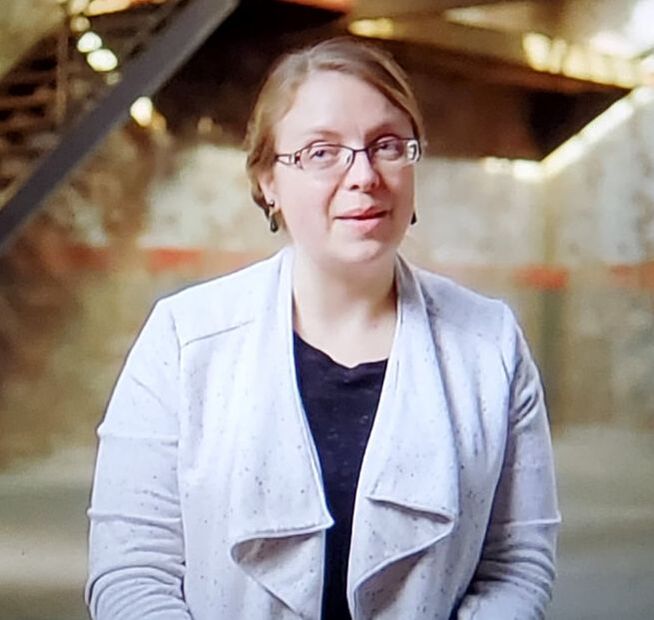
AuthorSarah Wassberg Johnson has an MA in Public History from the University at Albany and studies early 20th century food history. Archives
August 2026
Categories
All
|
 RSS Feed